Buy youshow.eu ?
We are moving the project
youshow.eu .
Are you interested in purchasing the domain
youshow.eu ?
domain@kv-gmbh.de · 0541-91531010
Buy youshow.eu ?
Laplace experiment or non-Laplace experiment?
A Laplace experiment is a random experiment in which all outcomes are equally likely. A non-Laplace experiment is a random experiment in which all outcomes are not equally likely. An example of a Laplace experiment is rolling a fair six-sided die, where each outcome has an equal probability of 1/6. An example of a non-Laplace experiment is drawing a card from a standard deck, where the probability of each outcome depends on the number of cards remaining in the deck. **
How to calculate the Laplace probability for event 2?
To calculate the Laplace probability for event 2, you need to divide the number of favorable outcomes for event 2 by the total number of possible outcomes. This can be represented as P(event 2) = Number of favorable outcomes for event 2 / Total number of possible outcomes. By determining the number of ways event 2 can occur and the total number of outcomes in the sample space, you can calculate the Laplace probability for event 2. **


Similar search terms for Laplace
Top-Angebote
Products related to Laplace:
-
Uplift Essentials Serene Motion Virtual Aquarium Lamp Serene Motion Virtual Aquarium Lamp"Bring the soothing magic of the underwater world to your tabletop with the Serene Motion Virtual Aquarium Lamp. This highdefinition desktop aquarium decorative light uses advanced ""movingpicture"" technology to create a mesmerizing, continuous swim..."82,97 $*Shipping: 0,00 $Secure redirect to the provider
-
Uplift Essentials Virtual Motion Ocean Aquarium Lamp Virtual Motion Ocean Aquarium Lamp"Experience the tranquil beauty of the deep blue without the maintenance of a real tank with the Virtual Motion Ocean Aquarium Lamp. This creative decorative piece uses highdefinition ""moving picture"" technology to simulate a vibrant tropical reef,..."79,97 $*Shipping: 0,00 $Secure redirect to the provider
-
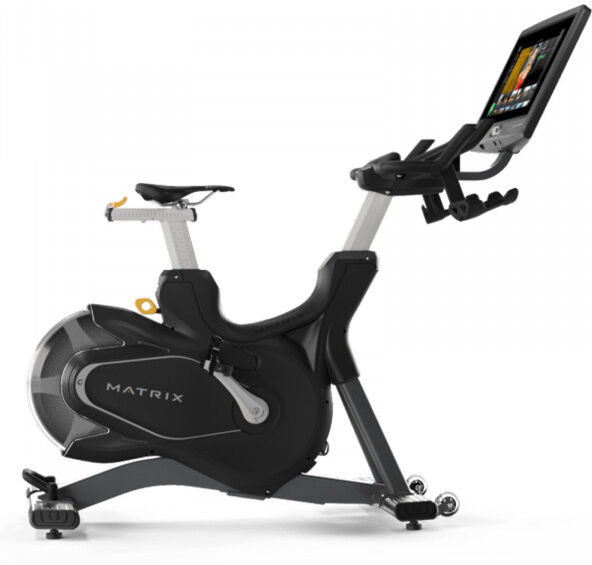
Matrix Virtual Training Cycle CXVTHE MATRIX VIRTUAL TRAINING CYCLE The Matrix Virtual Training Cycle is the purpose built bike for your cardio zone. Whether gym members are challenging themselves with exclusive workouts, enjoying streaming entertainment or taking on an immersive group class, the Virtual Training Cycle will...4794,00 £*Shipping: 0,00 £Secure redirect to the provider
-
Disney Showcase Rapunzel FigurineRadiant and full of optimism, this Disney Showcase figurine captures Rapunzel from Tangled in a beautifully detailed collector’s design. Celebrating her adventurous spirit and hopeful nature, Rapunzel is portrayed with exquisite finishing touches, including sparkling sleeves, delicate pearls braided through her flowing golden hair, and a gown decorated with sun and floral motifs inspired by her kingdom of Corona. Crafted from high‑quality cast stone resin and carefully hand‑painted, each figurine features subtle colour variations that enhance its handcrafted appeal and make every piece unique. The refined sculpting and elegant detailing give this figurine a polished, display‑worthy presence from every angle. Presented in a branded Disney Showcase gift box, this Rapunzel figurine is a stunning addition to any Disney princess collection and a thoughtful gift for fans of Tangled. Dimensions: 20.5(H) x 14(L) x 11.5(W) cm.59,95 £*Shipping: 0,00 £Secure redirect to the provider



-
How do you calculate the Laplace probability for event 2?
To calculate the Laplace probability for event 2, you need to determine the total number of possible outcomes and the number of outcomes favorable to event 2. Then, you divide the number of favorable outcomes by the total number of outcomes to get the probability. The formula for Laplace probability is P(event) = Number of favorable outcomes / Total number of outcomes. **
-
How to calculate the Laplace probability for the event 2?
To calculate the Laplace probability for the event 2, you need to first determine the total number of possible outcomes in the sample space. Then, identify the number of outcomes that correspond to the event 2. Finally, divide the number of favorable outcomes by the total number of outcomes to calculate the Laplace probability for the event 2. The formula for Laplace probability is P(event) = Number of favorable outcomes / Total number of outcomes. **
-
How do you calculate the Laplace probability for the event 2?
To calculate the Laplace probability for the event 2, you need to determine the total number of possible outcomes in the sample space and the number of outcomes that correspond to the event 2. Then, you divide the number of favorable outcomes by the total number of outcomes to get the probability. For example, if the sample space is {1, 2, 3, 4, 5, 6} and event 2 has one outcome, the Laplace probability for event 2 would be 1/6. **
-
What does the Laplace experiment mean?
The Laplace experiment refers to a thought experiment proposed by Pierre-Simon Laplace in the 18th century to illustrate the concept of determinism. In this experiment, Laplace imagined a hypothetical super-intelligent being that could know the precise position and momentum of every particle in the universe at a single point in time. With this knowledge, the being could theoretically predict the future and retrodict the past with perfect accuracy. The experiment serves to illustrate the idea that if the laws of nature are deterministic and all-encompassing, then the future and past are theoretically knowable. However, this concept has been challenged by quantum mechanics and chaos theory, which suggest that perfect predictability may not be achievable in practice. **


Is probability theory a Laplace experiment?
Yes, probability theory can be considered a Laplace experiment. A Laplace experiment is one in which all possible outcomes are equally likely, and probability theory deals with the study of random events and the likelihood of different outcomes. In probability theory, the concept of equally likely outcomes is fundamental, and many calculations and theories are based on this assumption. Therefore, probability theory can be seen as a type of Laplace experiment. **
What is a Laplace experiment in mathematics?
A Laplace experiment in mathematics refers to a random experiment in probability theory where the outcomes are equally likely to occur. This type of experiment is named after Pierre-Simon Laplace, a prominent mathematician and physicist. In a Laplace experiment, the probability of each outcome is determined by dividing the number of favorable outcomes by the total number of possible outcomes. This concept is fundamental in understanding the principles of probability and is widely used in various fields such as statistics, finance, and engineering. **
Top-Angebote
Products related to Laplace:
-
Ronald Redding Streaming Cheetah Linen WallpaperMarble veining and animal skin combine to compose a stream of color and print in pattern Streaming Cheetah. This Streaming Cheetah Wallpaper measures approximately 27 inches wide by 27 feet long, covering About 60.8 square feet per roll.170,00 $*Shipping: 0,00 $Secure redirect to the provider
-
Logitech Litra Glow Streaming Light BlackStreaming light delivering 250 lumens with adjustable color temperature from 2700K to 6500K for natural, flattering lighting. TrueSoft technology diffuses light evenly to enhance skin tone during streaming and video calls. USB-powered with software control via Logitech G HUB; includes adjustable monitor mount for height, tilt, and rotation customization. Compatible with Windows 10+ and macOS 10.14+.82,49 £*Shipping: 0,00 £Secure redirect to the provider
-
Uplift Essentials Serene Motion Virtual Aquarium Lamp Serene Motion Virtual Aquarium Lamp"Bring the soothing magic of the underwater world to your tabletop with the Serene Motion Virtual Aquarium Lamp. This highdefinition desktop aquarium decorative light uses advanced ""movingpicture"" technology to create a mesmerizing, continuous swim..."82,97 $*Shipping: 0,00 $Secure redirect to the provider
-
Uplift Essentials Virtual Motion Ocean Aquarium Lamp Virtual Motion Ocean Aquarium Lamp"Experience the tranquil beauty of the deep blue without the maintenance of a real tank with the Virtual Motion Ocean Aquarium Lamp. This creative decorative piece uses highdefinition ""moving picture"" technology to simulate a vibrant tropical reef,..."79,97 $*Shipping: 0,00 $Secure redirect to the provider
-
Laplace experiment or non-Laplace experiment?
A Laplace experiment is a random experiment in which all outcomes are equally likely. A non-Laplace experiment is a random experiment in which all outcomes are not equally likely. An example of a Laplace experiment is rolling a fair six-sided die, where each outcome has an equal probability of 1/6. An example of a non-Laplace experiment is drawing a card from a standard deck, where the probability of each outcome depends on the number of cards remaining in the deck. **
-
How to calculate the Laplace probability for event 2?
To calculate the Laplace probability for event 2, you need to divide the number of favorable outcomes for event 2 by the total number of possible outcomes. This can be represented as P(event 2) = Number of favorable outcomes for event 2 / Total number of possible outcomes. By determining the number of ways event 2 can occur and the total number of outcomes in the sample space, you can calculate the Laplace probability for event 2. **
-
How do you calculate the Laplace probability for event 2?
To calculate the Laplace probability for event 2, you need to determine the total number of possible outcomes and the number of outcomes favorable to event 2. Then, you divide the number of favorable outcomes by the total number of outcomes to get the probability. The formula for Laplace probability is P(event) = Number of favorable outcomes / Total number of outcomes. **
-
How to calculate the Laplace probability for the event 2?
To calculate the Laplace probability for the event 2, you need to first determine the total number of possible outcomes in the sample space. Then, identify the number of outcomes that correspond to the event 2. Finally, divide the number of favorable outcomes by the total number of outcomes to calculate the Laplace probability for the event 2. The formula for Laplace probability is P(event) = Number of favorable outcomes / Total number of outcomes. **
Similar search terms for Laplace
-
Matrix Virtual Training Cycle CXVTHE MATRIX VIRTUAL TRAINING CYCLE The Matrix Virtual Training Cycle is the purpose built bike for your cardio zone. Whether gym members are challenging themselves with exclusive workouts, enjoying streaming entertainment or taking on an immersive group class, the Virtual Training Cycle will...4794,00 £*Shipping: 0,00 £Secure redirect to the provider
-
Disney Showcase Rapunzel FigurineRadiant and full of optimism, this Disney Showcase figurine captures Rapunzel from Tangled in a beautifully detailed collector’s design. Celebrating her adventurous spirit and hopeful nature, Rapunzel is portrayed with exquisite finishing touches, including sparkling sleeves, delicate pearls braided through her flowing golden hair, and a gown decorated with sun and floral motifs inspired by her kingdom of Corona. Crafted from high‑quality cast stone resin and carefully hand‑painted, each figurine features subtle colour variations that enhance its handcrafted appeal and make every piece unique. The refined sculpting and elegant detailing give this figurine a polished, display‑worthy presence from every angle. Presented in a branded Disney Showcase gift box, this Rapunzel figurine is a stunning addition to any Disney princess collection and a thoughtful gift for fans of Tangled. Dimensions: 20.5(H) x 14(L) x 11.5(W) cm.59,95 £*Shipping: 0,00 £Secure redirect to the provider
-
Eve Play (Apple Home) – Audio Streaming Interface for AirPlayStream your music to existing amplifiers, powered speakers or soundbars with AirPlay and make your favorite Hi-Fi components smart. Synchronous multi-room playback: Audio Sync allows the system to play simultaneously with other AirPlay devices without speaker delay. Powerful digital-to-analog converter with 112 dB signal-to-noise ratio for a high-end audiophile sound experience. Flexible analog or digital connectivity: Connect your Hi-Fi components with the included RCA cable or digitally via optical and coaxial connections. Integrated Ethernet port for highly stable streaming quality143,49 £*Shipping: 0,00 £Secure redirect to the provider
-
Disney Showcase Madame Medusa FigurineBold, dramatic, and unapologetically extravagant, this Disney Showcase figurine introduces Madame Medusa from The Rescuers as a striking villain centrepiece. Created to mark the 45th anniversary of the 1977 Disney classic, the design captures Medusa’s obsessive pursuit of diamonds, a defining trait of her larger‑than‑life personality. Crafted from cast stone resin and finished with exceptional attention to detail, the figurine features embedded gemstones, a vivid red glitter dress, and a fur‑trimmed cape with a high‑low design that adds both movement and stability. The sculpted pose and expressive detailing bring Medusa’s greed‑driven ambition vividly to life, making this a standout piece within the Disney Showcase villain collection. Each figurine is carefully hand‑painted, with subtle colour variations ensuring every piece is unique. Presented in a fully branded Disney Showcase gift box, this collectible is ideal for Disney villain fans and collectors of statement display pieces. Dimensions: 22.5(H) x 12(L) x 11(W) cm.84,95 £*Shipping: 0,00 £Secure redirect to the provider
-
How do you calculate the Laplace probability for the event 2?
To calculate the Laplace probability for the event 2, you need to determine the total number of possible outcomes in the sample space and the number of outcomes that correspond to the event 2. Then, you divide the number of favorable outcomes by the total number of outcomes to get the probability. For example, if the sample space is {1, 2, 3, 4, 5, 6} and event 2 has one outcome, the Laplace probability for event 2 would be 1/6. **
-
What does the Laplace experiment mean?
The Laplace experiment refers to a thought experiment proposed by Pierre-Simon Laplace in the 18th century to illustrate the concept of determinism. In this experiment, Laplace imagined a hypothetical super-intelligent being that could know the precise position and momentum of every particle in the universe at a single point in time. With this knowledge, the being could theoretically predict the future and retrodict the past with perfect accuracy. The experiment serves to illustrate the idea that if the laws of nature are deterministic and all-encompassing, then the future and past are theoretically knowable. However, this concept has been challenged by quantum mechanics and chaos theory, which suggest that perfect predictability may not be achievable in practice. **
-
Is probability theory a Laplace experiment?
Yes, probability theory can be considered a Laplace experiment. A Laplace experiment is one in which all possible outcomes are equally likely, and probability theory deals with the study of random events and the likelihood of different outcomes. In probability theory, the concept of equally likely outcomes is fundamental, and many calculations and theories are based on this assumption. Therefore, probability theory can be seen as a type of Laplace experiment. **
-
What is a Laplace experiment in mathematics?
A Laplace experiment in mathematics refers to a random experiment in probability theory where the outcomes are equally likely to occur. This type of experiment is named after Pierre-Simon Laplace, a prominent mathematician and physicist. In a Laplace experiment, the probability of each outcome is determined by dividing the number of favorable outcomes by the total number of possible outcomes. This concept is fundamental in understanding the principles of probability and is widely used in various fields such as statistics, finance, and engineering. **
* All prices are inclusive of VAT and, if applicable, plus shipping costs. The offer information is based on the details provided by the respective shop and is updated through automated processes. Real-time updates do not occur, so deviations can occur in individual cases. ** Note: Parts of this content were created by AI.