Buy youshow.eu ?
We are moving the project
youshow.eu .
Are you interested in purchasing the domain
youshow.eu ?
domain@kv-gmbh.de · 0541-91531010
Buy youshow.eu ?
Why does the BIOS show 2133 MHz instead of the actual 3000 MHz?
The BIOS may show 2133 MHz instead of the actual 3000 MHz because the default setting for RAM speed in many motherboards is 2133 MHz. This default setting is used to ensure compatibility with a wide range of RAM modules. To achieve the actual 3000 MHz speed of the RAM, you may need to manually adjust the settings in the BIOS to enable the XMP (Extreme Memory Profile) or DOCP (Direct Over Clock Profile) feature, which allows the RAM to run at its rated speed. **
Why does the BIOS show 2133 MHz instead of the expected 3000 MHz?
The BIOS may show 2133 MHz instead of the expected 3000 MHz due to several reasons. One possible reason is that the RAM modules are not properly configured in the BIOS settings to run at their rated speed. Another reason could be that the motherboard does not support the higher speed and is defaulting to a lower speed. Additionally, the CPU may not support the higher speed, causing the RAM to run at a lower speed. In any case, adjusting the BIOS settings or checking for compatibility issues with the motherboard and CPU can help resolve the issue. **

Similar search terms for Mhz
Top-Angebote
Products related to Mhz:
-
Dell HYXPX 8GB DDR4 2666 MHz SODIMM Laptop Memory Module, 1Rx8, 1.2VDell HYXPX memory upgrade: a single 8 GB DDR4-2666 (PC4-2666V) 260-pin SODIMM, single rank x8, 1.2 V, non-ECC, for Dell laptops and small-form-factor systems. Sold as one module.189,49 £*Shipping: 0,00 £Secure redirect to the provider
-
Crucial Pro 32 GB 6000 MHz DDR5 Memory Kit - 16 GB x 2Crucial Pro 32GB (2 x 16GB) DDR5-6000 desktop memory kit, part number CP2K16G60C48U5. Two 16GB unbuffered DIMMs running at 6000MT/s (CL48), supporting Intel XMP 3.0 and AMD EXPO profiles.565,99 £*Shipping: 0,00 £Secure redirect to the provider
-
Dell AB663418 16GB DDR4 3200 MHz ECC UDIMM Memory Module, 1Rx8, 288-pinDell AB663418 memory upgrade: a single 16 GB DDR4-3200 (PC4-3200AA) 288-pin unbuffered DIMM with ECC, single rank x8 organisation. Dell equivalent part number SNPR1WG8C/16G. Sold as one module.509,99 £*Shipping: 0,00 £Secure redirect to the provider
-
Dell HNDJ7 16GB DDR4 2400 MHz ECC Registered DIMM Memory Module, 2Rx8, 1.2VDell HNDJ7 server memory: a single 16 GB DDR4-2400 (PC4-2400T) ECC registered DIMM, dual rank x8, 1.2 V. Dell equivalent part number SNPHNDJ7C/16G, matching Samsung M393A2K43BB1-CRC. Sold as one module.244,99 £*Shipping: 0,00 £Secure redirect to the provider


-
Why does the RAM only show 1067 MHz instead of the actual 3200 MHz?
The RAM is showing 1067 MHz instead of the actual 3200 MHz because the 1067 MHz is the base clock speed of the RAM module. The actual speed of the RAM is 3200 MHz, but this is achieved through overclocking, which means running the RAM at a higher speed than its default setting. The system may not automatically recognize the overclocked speed, so it defaults to the base clock speed. To make the RAM run at its actual 3200 MHz speed, the user may need to manually adjust the settings in the BIOS or use software provided by the RAM manufacturer. **
-
Why 2133 MHz instead of 3200 MHz?
2133 MHz is a lower frequency compared to 3200 MHz. The choice of using 2133 MHz instead of 3200 MHz could be due to cost considerations, compatibility with other hardware components, or the specific requirements of the system. Lower frequency RAM may be sufficient for certain applications and can be more cost-effective, while higher frequency RAM may be necessary for more demanding tasks such as gaming or video editing. Ultimately, the decision to use 2133 MHz instead of 3200 MHz would depend on the specific needs and budget of the user. **
-
Why does my RAM only show 1500 MHz?
Your RAM may only be showing 1500 MHz because it is running at its default speed. Many RAM modules have a default speed of 1500 MHz, and they may need to be manually overclocked in the BIOS settings to achieve higher speeds. Additionally, the motherboard and CPU also play a role in determining the maximum speed at which the RAM can operate. If you want to run your RAM at a higher speed, you may need to check your motherboard's compatibility and adjust the settings in the BIOS. **
-
Is DDR2 RAM with 800 MHz/667 MHz downward compatible to 333 MHz?
Yes, DDR2 RAM with 800 MHz/667 MHz is downward compatible to 333 MHz. This means that if you have a motherboard that supports DDR2 RAM with a maximum speed of 333 MHz, you can still use DDR2 RAM with higher speeds such as 800 MHz or 667 MHz. The RAM will simply operate at the maximum speed supported by the motherboard, in this case 333 MHz. **


Why exactly 2933 MHz and not 3200 MHz?
The choice of 2933 MHz over 3200 MHz could be due to a variety of reasons. It could be that the specific hardware or system being used is optimized for 2933 MHz and may not support 3200 MHz. Additionally, 2933 MHz may offer a better balance of performance and power consumption for the specific application or use case. It's also possible that 2933 MHz memory modules were more readily available or cost-effective at the time of the decision. Ultimately, the choice of 2933 MHz over 3200 MHz would depend on the specific requirements and constraints of the system in question. **
Does 3000 MHz RAM run at 2133 MHz?
No, 3000 MHz RAM does not run at 2133 MHz. The speed of RAM is determined by its rated frequency, so a 3000 MHz RAM module will run at 3000 MHz when installed in a compatible system. Running it at a lower speed, such as 2133 MHz, would be a downgrade in performance. **
Top-Angebote
Products related to Mhz:
-
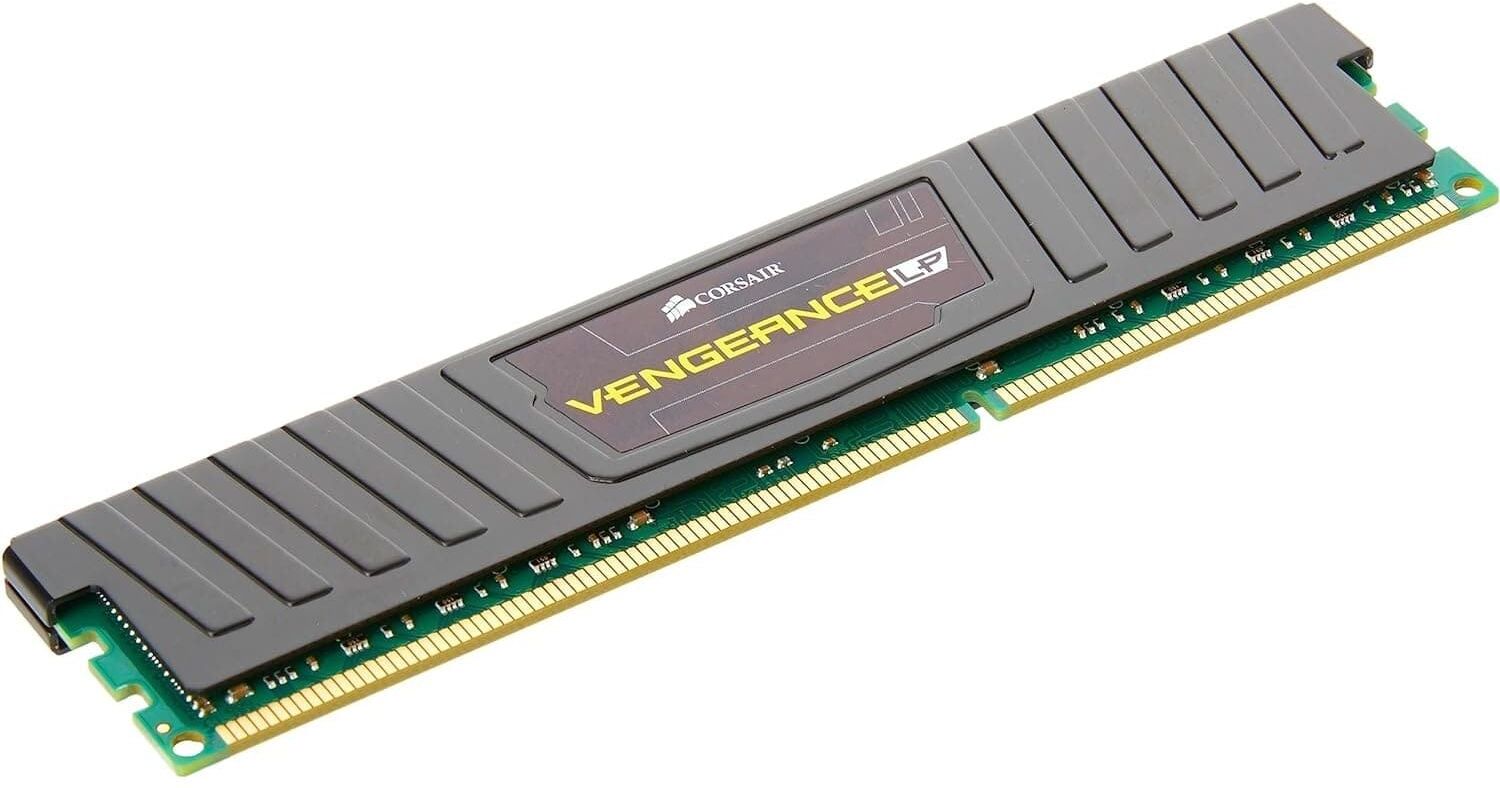
Corsair CML8GX3M1A1600C10 Vengeance Low Profile 8GB (1x8GB) DDR3 1600 Mhz CL10 XMP Performance Desktop Memory Module BlackBrand Corsair Product Dimensions 15.24 x 1.6 x 7.62 cm; 45 Grams Item model number CML8GX3M1A1600C10 Manufacturer Corsair Colour Black Form Factor 240-pin DIMM RAM Size 8 GB Memory Technology A8 Computer Memory Type DDR3 SDRAM Memory Clock Speed 1600 MHz Voltage 1.5 Volts Operating System Microsoft Are Batteries Included No Item Weight 45 g33,99 £*Shipping: 0,00 £Secure redirect to the provider
-
Dell HYXPX 8GB DDR4 2666 MHz SODIMM Laptop Memory Module, 1Rx8, 1.2VDell HYXPX memory upgrade: a single 8 GB DDR4-2666 (PC4-2666V) 260-pin SODIMM, single rank x8, 1.2 V, non-ECC, for Dell laptops and small-form-factor systems. Sold as one module.189,49 £*Shipping: 0,00 £Secure redirect to the provider
-
Crucial Pro 32 GB 6000 MHz DDR5 Memory Kit - 16 GB x 2Crucial Pro 32GB (2 x 16GB) DDR5-6000 desktop memory kit, part number CP2K16G60C48U5. Two 16GB unbuffered DIMMs running at 6000MT/s (CL48), supporting Intel XMP 3.0 and AMD EXPO profiles.565,99 £*Shipping: 0,00 £Secure redirect to the provider
-
Why does the BIOS show 2133 MHz instead of the actual 3000 MHz?
The BIOS may show 2133 MHz instead of the actual 3000 MHz because the default setting for RAM speed in many motherboards is 2133 MHz. This default setting is used to ensure compatibility with a wide range of RAM modules. To achieve the actual 3000 MHz speed of the RAM, you may need to manually adjust the settings in the BIOS to enable the XMP (Extreme Memory Profile) or DOCP (Direct Over Clock Profile) feature, which allows the RAM to run at its rated speed. **
-
Why does the BIOS show 2133 MHz instead of the expected 3000 MHz?
The BIOS may show 2133 MHz instead of the expected 3000 MHz due to several reasons. One possible reason is that the RAM modules are not properly configured in the BIOS settings to run at their rated speed. Another reason could be that the motherboard does not support the higher speed and is defaulting to a lower speed. Additionally, the CPU may not support the higher speed, causing the RAM to run at a lower speed. In any case, adjusting the BIOS settings or checking for compatibility issues with the motherboard and CPU can help resolve the issue. **
-
Why does the RAM only show 1067 MHz instead of the actual 3200 MHz?
The RAM is showing 1067 MHz instead of the actual 3200 MHz because the 1067 MHz is the base clock speed of the RAM module. The actual speed of the RAM is 3200 MHz, but this is achieved through overclocking, which means running the RAM at a higher speed than its default setting. The system may not automatically recognize the overclocked speed, so it defaults to the base clock speed. To make the RAM run at its actual 3200 MHz speed, the user may need to manually adjust the settings in the BIOS or use software provided by the RAM manufacturer. **
-
Why 2133 MHz instead of 3200 MHz?
2133 MHz is a lower frequency compared to 3200 MHz. The choice of using 2133 MHz instead of 3200 MHz could be due to cost considerations, compatibility with other hardware components, or the specific requirements of the system. Lower frequency RAM may be sufficient for certain applications and can be more cost-effective, while higher frequency RAM may be necessary for more demanding tasks such as gaming or video editing. Ultimately, the decision to use 2133 MHz instead of 3200 MHz would depend on the specific needs and budget of the user. **
Similar search terms for Mhz
-
Dell AB663418 16GB DDR4 3200 MHz ECC UDIMM Memory Module, 1Rx8, 288-pinDell AB663418 memory upgrade: a single 16 GB DDR4-3200 (PC4-3200AA) 288-pin unbuffered DIMM with ECC, single rank x8 organisation. Dell equivalent part number SNPR1WG8C/16G. Sold as one module.509,99 £*Shipping: 0,00 £Secure redirect to the provider
-
Dell HNDJ7 16GB DDR4 2400 MHz ECC Registered DIMM Memory Module, 2Rx8, 1.2VDell HNDJ7 server memory: a single 16 GB DDR4-2400 (PC4-2400T) ECC registered DIMM, dual rank x8, 1.2 V. Dell equivalent part number SNPHNDJ7C/16G, matching Samsung M393A2K43BB1-CRC. Sold as one module.244,99 £*Shipping: 0,00 £Secure redirect to the provider
-
Corsair CMK16GX4M2A2133C13 Vengeance LPX 16 GB (2 x 8 GB) DDR4 2133 MHz C13 XMP 2.0 High Performance Desktop Memory Kit, Black, NewEach Vengeance LPX module is built with a pure aluminium heat spreader for faster heat dissipation and cooler operation Available in multiple colours to match your motherboard, your components or just your style, The Vengeance LPX module height is carefully designed to fit smaller spaces Vengeance LPX is optimised and offers higher frequencies, high bandwidth, and lower power consumption. Compatibility-Intel 100 Series,Intel 200 Series,Intel 300 Series,Intel 400 Series,Intel X299 It compatible with iMac Pro UDIMM only XMP 2.0 enabled for high overclocking. Brand Corsair Computer memory size 16 GB RAM memory technology DDR2, DDR3 Memory speed 2133 MHz Compatible devices PC/server199,00 £*Shipping: 0,00 £Secure redirect to the provider
-
ADATA AD4S32008G22-SGN memory module 8 GB 1 x 8 GB DDR4 3200 MHzADATA AD4S32008G22-SGN. Component for: Laptop, Internal memory: 8 GB, Memory layout (modules x size): 1 x 8 GB, Internal memory type: DDR4, Memory clock speed: 3200 MHz, Memory form factor: 260-pin SO-DIMM92,49 £*Shipping: 0,00 £Secure redirect to the provider
-
Why does my RAM only show 1500 MHz?
Your RAM may only be showing 1500 MHz because it is running at its default speed. Many RAM modules have a default speed of 1500 MHz, and they may need to be manually overclocked in the BIOS settings to achieve higher speeds. Additionally, the motherboard and CPU also play a role in determining the maximum speed at which the RAM can operate. If you want to run your RAM at a higher speed, you may need to check your motherboard's compatibility and adjust the settings in the BIOS. **
-
Is DDR2 RAM with 800 MHz/667 MHz downward compatible to 333 MHz?
Yes, DDR2 RAM with 800 MHz/667 MHz is downward compatible to 333 MHz. This means that if you have a motherboard that supports DDR2 RAM with a maximum speed of 333 MHz, you can still use DDR2 RAM with higher speeds such as 800 MHz or 667 MHz. The RAM will simply operate at the maximum speed supported by the motherboard, in this case 333 MHz. **
-
Why exactly 2933 MHz and not 3200 MHz?
The choice of 2933 MHz over 3200 MHz could be due to a variety of reasons. It could be that the specific hardware or system being used is optimized for 2933 MHz and may not support 3200 MHz. Additionally, 2933 MHz may offer a better balance of performance and power consumption for the specific application or use case. It's also possible that 2933 MHz memory modules were more readily available or cost-effective at the time of the decision. Ultimately, the choice of 2933 MHz over 3200 MHz would depend on the specific requirements and constraints of the system in question. **
-
Does 3000 MHz RAM run at 2133 MHz?
No, 3000 MHz RAM does not run at 2133 MHz. The speed of RAM is determined by its rated frequency, so a 3000 MHz RAM module will run at 3000 MHz when installed in a compatible system. Running it at a lower speed, such as 2133 MHz, would be a downgrade in performance. **
* All prices are inclusive of VAT and, if applicable, plus shipping costs. The offer information is based on the details provided by the respective shop and is updated through automated processes. Real-time updates do not occur, so deviations can occur in individual cases. ** Note: Parts of this content were created by AI.