Buy youshow.eu ?
We are moving the project
youshow.eu .
Are you interested in purchasing the domain
youshow.eu ?
domain@kv-gmbh.de · 0541-91531010
Buy youshow.eu ?
Why does sexual reproduction have an advantage over asexual reproduction?
Sexual reproduction has an advantage over asexual reproduction because it promotes genetic diversity. Through the process of meiosis and fertilization, offspring inherit a unique combination of genes from both parents, increasing genetic variation within a population. This diversity enhances the ability of a species to adapt to changing environments and reduces the risk of genetic diseases. Additionally, sexual reproduction allows for the elimination of harmful mutations through genetic recombination, leading to healthier and more robust offspring. **
What is beech reproduction?
Beech reproduction refers to the process by which beech trees produce offspring. Beech trees reproduce through seeds that are contained within small, prickly husks known as beechnuts. These seeds are dispersed by animals or the wind, and when conditions are favorable, they germinate and grow into new beech trees. Beech trees can also reproduce through root sprouts, where new trees grow from the roots of existing trees. **


Similar search terms for Reproduction
Top-Angebote
Products related to Reproduction:
-
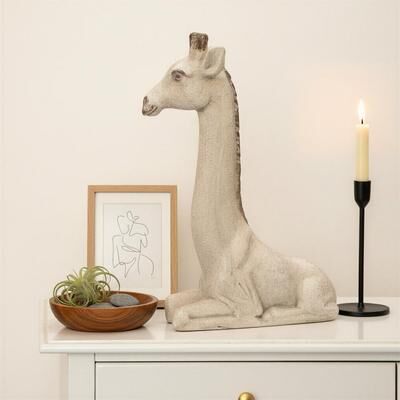
Storied Home "Magnesia Vintage Reproduction Giraffe Calf Figurine - 13.75""L x 5.88""W x 18.13""H"Add the Magnesia Vintage Reproduction Giraffe Calf Figurine with Antique Grey Finish to any space for a captivating blend of artistry and nostalgia.71,49 $*Shipping: 0,00 $Secure redirect to the provider
-
Penguin UK Ltd Dino Dad Series 4 Books Collection Set By Andy Day (Dino Dad, Ice Age, Big School Talent Show, Mystery of the Missing Egg)Titles in this Set: 1. Dino Dad 2. Dino Dad: Ice Age 3. Dino Dad: Big School Talent Show 4. Dino Dad: Mystery of the Missing Egg Description: Dino Dad What if YOUR dad was a dinosaur? Hi, I'm Ruby! And I've got a big secret . . . everyone thinks my dad is an amazing dinosaur expert at our local museum. And he totally is! But he's also . . . a POOPA! And so am I! What's a POOPA? Well, it means he's a Protector Of Our Prehistoric Allies. When me and Dad touch his special, magic ammonite shell, we travel to an incredible island, full of dinosaurs. And when we go there, we turn into dinosaurs too! We have so many amazing adventures . . . and I can't wait for you to join us! Dino Dad: Ice Age Hello! It's me, Ruby Thumb. You might remember me and my dad - we're famous POOPAs. What do you mean you've not heard of us? And you don't know what a POOPA is?! It means we're Protector Of Our Dinosaur Allies - obviously! Me and my dad have loads of amazing adventures in Dinotropolis - an incredible island, full of dinosaurs who live just like us humans do. And when we go there using our special magic Ammonite shell, we turn into dinosaurs too! I can't wait to tell you all about our amazing frozen adventure. We had to rescue a baby woolly mammoth, and make sure it got back safely to its mummy - as well as un-freeze Dinotropolis! It was pretty roarsome - let me tell you all about it! Dino Dad: Big School Talent Show Hello! It's me, Ruby Thumb. Me and my dad have loads of amazing adventures in Dinotropolis - an incredible island, full of dinosaurs who live just like us humans do. And when we go there using our special magic ammonite shell, we turn into dinosaurs too! Let me tell you about the time I spent the week at Pangea’s Largest Outstanding Prehistoric School - or PLOPS, as we call it, ha! - AND took part in the Big Dino Talent Show. It was totally roarsome, but there were a few dino-tastic surprises along the way... Dino Dad: Mystery of the Missing Egg Hello! It's me, Ruby Thumb. Me and my dad have loads of amazing adventures in Dinotropolis - an incredible island, full of dinosaurs who live just like us humans do. And when we go there using our special magic Ammonite shell, we turn into dinosaurs too! I can't wait to tell you all about our next adventure. It was fantastic - I got to be a real-life dino detective! Me and dad had to solve the mystery of a missing fossilised dinosaur egg . . . and we discovered something amazing along the way . . . !12,99 £*Shipping: 2,99 £Secure redirect to the provider
-
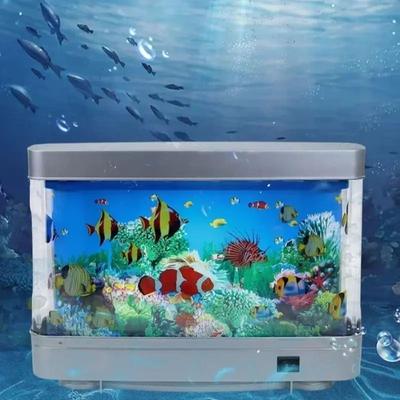
Uplift Essentials Serene Motion Virtual Aquarium Lamp Serene Motion Virtual Aquarium Lamp"Bring the soothing magic of the underwater world to your tabletop with the Serene Motion Virtual Aquarium Lamp. This highdefinition desktop aquarium decorative light uses advanced ""movingpicture"" technology to create a mesmerizing, continuous swim..."82,97 $*Shipping: 0,00 $Secure redirect to the provider
-
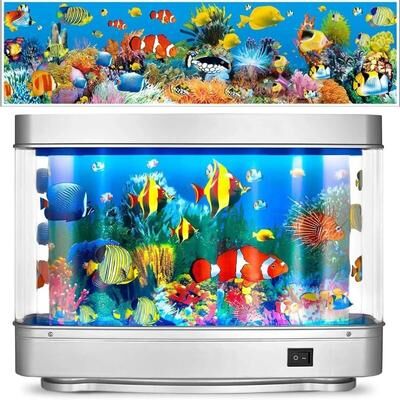
Uplift Essentials Virtual Motion Ocean Aquarium Lamp Virtual Motion Ocean Aquarium Lamp"Experience the tranquil beauty of the deep blue without the maintenance of a real tank with the Virtual Motion Ocean Aquarium Lamp. This creative decorative piece uses highdefinition ""moving picture"" technology to simulate a vibrant tropical reef,..."79,97 $*Shipping: 0,00 $Secure redirect to the provider

-
What characterizes sexual reproduction?
Sexual reproduction is characterized by the fusion of two specialized sex cells, typically a sperm and an egg, to create a new organism. This process introduces genetic variation into the offspring, as each parent contributes a unique set of genes. Sexual reproduction also requires the involvement of two individuals, leading to a greater diversity of traits within a population. Additionally, sexual reproduction often involves the development of specialized reproductive organs and behaviors to facilitate the union of the sex cells. **
-
What is cell reproduction?
Cell reproduction is the process by which cells divide and create new cells. This is essential for growth, repair, and maintenance of the body. There are two main types of cell reproduction: mitosis, which produces two identical daughter cells, and meiosis, which produces four genetically unique daughter cells. Cell reproduction is tightly regulated to ensure proper functioning of the body and to prevent diseases like cancer. **
-
How did humans discover reproduction?
Humans likely discovered reproduction through observation of the natural world around them. They would have noticed that animals and plants were able to produce offspring, and through trial and error, they would have learned about the connection between sexual activity and the birth of new life. Over time, humans would have developed a deeper understanding of the reproductive process through scientific inquiry and experimentation. This knowledge would have been passed down through generations, leading to the development of more advanced reproductive technologies and understanding of human reproduction. **
-
Should human reproduction be controlled?
The question of whether human reproduction should be controlled is a complex and controversial issue. On one hand, some argue that controlling human reproduction is necessary to address overpopulation, reduce strain on resources, and prevent environmental degradation. On the other hand, others believe that reproductive rights are fundamental human rights and that individuals should have the freedom to make their own reproductive choices. Ultimately, the answer to this question depends on one's values, beliefs, and perspectives on individual rights versus societal needs. It is important to approach this issue with sensitivity and consideration for the diverse perspectives and implications involved. **

What is meant by social reproduction?
Social reproduction refers to the processes and mechanisms through which societies perpetuate and maintain their social structures, norms, and inequalities over time. This includes the reproduction of social classes, gender roles, racial hierarchies, and other forms of social inequality through various institutions such as the family, education system, and the economy. It encompasses the ways in which individuals are socialized into existing social structures and how these structures are maintained and perpetuated through various social practices and institutions. Social reproduction is a key concept in understanding how social inequalities are sustained and perpetuated across generations. **
What is the reproduction factor 3?
The reproduction factor 3, also known as the basic reproduction number (R0), is a measure of how contagious an infectious disease is. It represents the average number of secondary infections produced by a single infected individual in a population where everyone is susceptible to the disease. A reproduction factor of 3 means that, on average, each infected person will transmit the disease to 3 other people. This value is used by epidemiologists to assess the potential for an outbreak to become an epidemic. **
Top-Angebote
Products related to Reproduction:
-
Bronzhaus Handmade Antique Reproduction Tin Model Train-1906 Steam Trains Figurine ArtworkDecorate for any table, desk, or shelf in sporty fashion with Our Rustic 1906 Steam Trains. Featuring a rustic iron frame, this charming vintage Classic Tin Model Train-1906 Steam Trains includes a fine details.109,99 $*Shipping: 0,00 $Secure redirect to the provider
-
Bronzhaus Antique Reproduction Red German Rotary Dial Phone Sculpture Figurine Decor DealDecorate for any table, desk, or shelf in sporty fashion with Our Rustic Red German Rotary Dial Phone. Featuring a rustic iron frame, this charming vintage Classic Phone includes a fine details.52,99 $*Shipping: 0,00 $Secure redirect to the provider
-
Storied Home "Magnesia Vintage Reproduction Giraffe Calf Figurine - 13.75""L x 5.88""W x 18.13""H"Add the Magnesia Vintage Reproduction Giraffe Calf Figurine with Antique Grey Finish to any space for a captivating blend of artistry and nostalgia.71,49 $*Shipping: 0,00 $Secure redirect to the provider
-
Penguin UK Ltd Dino Dad Series 4 Books Collection Set By Andy Day (Dino Dad, Ice Age, Big School Talent Show, Mystery of the Missing Egg)Titles in this Set: 1. Dino Dad 2. Dino Dad: Ice Age 3. Dino Dad: Big School Talent Show 4. Dino Dad: Mystery of the Missing Egg Description: Dino Dad What if YOUR dad was a dinosaur? Hi, I'm Ruby! And I've got a big secret . . . everyone thinks my dad is an amazing dinosaur expert at our local museum. And he totally is! But he's also . . . a POOPA! And so am I! What's a POOPA? Well, it means he's a Protector Of Our Prehistoric Allies. When me and Dad touch his special, magic ammonite shell, we travel to an incredible island, full of dinosaurs. And when we go there, we turn into dinosaurs too! We have so many amazing adventures . . . and I can't wait for you to join us! Dino Dad: Ice Age Hello! It's me, Ruby Thumb. You might remember me and my dad - we're famous POOPAs. What do you mean you've not heard of us? And you don't know what a POOPA is?! It means we're Protector Of Our Dinosaur Allies - obviously! Me and my dad have loads of amazing adventures in Dinotropolis - an incredible island, full of dinosaurs who live just like us humans do. And when we go there using our special magic Ammonite shell, we turn into dinosaurs too! I can't wait to tell you all about our amazing frozen adventure. We had to rescue a baby woolly mammoth, and make sure it got back safely to its mummy - as well as un-freeze Dinotropolis! It was pretty roarsome - let me tell you all about it! Dino Dad: Big School Talent Show Hello! It's me, Ruby Thumb. Me and my dad have loads of amazing adventures in Dinotropolis - an incredible island, full of dinosaurs who live just like us humans do. And when we go there using our special magic ammonite shell, we turn into dinosaurs too! Let me tell you about the time I spent the week at Pangea’s Largest Outstanding Prehistoric School - or PLOPS, as we call it, ha! - AND took part in the Big Dino Talent Show. It was totally roarsome, but there were a few dino-tastic surprises along the way... Dino Dad: Mystery of the Missing Egg Hello! It's me, Ruby Thumb. Me and my dad have loads of amazing adventures in Dinotropolis - an incredible island, full of dinosaurs who live just like us humans do. And when we go there using our special magic Ammonite shell, we turn into dinosaurs too! I can't wait to tell you all about our next adventure. It was fantastic - I got to be a real-life dino detective! Me and dad had to solve the mystery of a missing fossilised dinosaur egg . . . and we discovered something amazing along the way . . . !12,99 £*Shipping: 2,99 £Secure redirect to the provider
-
Why does sexual reproduction have an advantage over asexual reproduction?
Sexual reproduction has an advantage over asexual reproduction because it promotes genetic diversity. Through the process of meiosis and fertilization, offspring inherit a unique combination of genes from both parents, increasing genetic variation within a population. This diversity enhances the ability of a species to adapt to changing environments and reduces the risk of genetic diseases. Additionally, sexual reproduction allows for the elimination of harmful mutations through genetic recombination, leading to healthier and more robust offspring. **
-
What is beech reproduction?
Beech reproduction refers to the process by which beech trees produce offspring. Beech trees reproduce through seeds that are contained within small, prickly husks known as beechnuts. These seeds are dispersed by animals or the wind, and when conditions are favorable, they germinate and grow into new beech trees. Beech trees can also reproduce through root sprouts, where new trees grow from the roots of existing trees. **
-
What characterizes sexual reproduction?
Sexual reproduction is characterized by the fusion of two specialized sex cells, typically a sperm and an egg, to create a new organism. This process introduces genetic variation into the offspring, as each parent contributes a unique set of genes. Sexual reproduction also requires the involvement of two individuals, leading to a greater diversity of traits within a population. Additionally, sexual reproduction often involves the development of specialized reproductive organs and behaviors to facilitate the union of the sex cells. **
-
What is cell reproduction?
Cell reproduction is the process by which cells divide and create new cells. This is essential for growth, repair, and maintenance of the body. There are two main types of cell reproduction: mitosis, which produces two identical daughter cells, and meiosis, which produces four genetically unique daughter cells. Cell reproduction is tightly regulated to ensure proper functioning of the body and to prevent diseases like cancer. **
Similar search terms for Reproduction
-
Uplift Essentials Serene Motion Virtual Aquarium Lamp Serene Motion Virtual Aquarium Lamp"Bring the soothing magic of the underwater world to your tabletop with the Serene Motion Virtual Aquarium Lamp. This highdefinition desktop aquarium decorative light uses advanced ""movingpicture"" technology to create a mesmerizing, continuous swim..."82,97 $*Shipping: 0,00 $Secure redirect to the provider
-
Uplift Essentials Virtual Motion Ocean Aquarium Lamp Virtual Motion Ocean Aquarium Lamp"Experience the tranquil beauty of the deep blue without the maintenance of a real tank with the Virtual Motion Ocean Aquarium Lamp. This creative decorative piece uses highdefinition ""moving picture"" technology to simulate a vibrant tropical reef,..."79,97 $*Shipping: 0,00 $Secure redirect to the provider
-
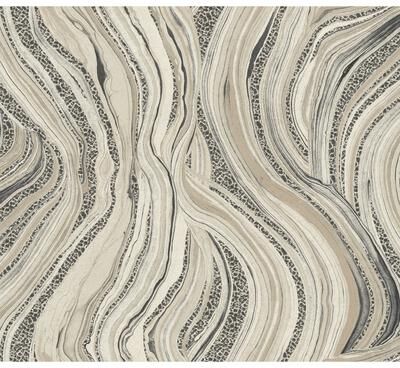
Ronald Redding Streaming Cheetah Linen WallpaperMarble veining and animal skin combine to compose a stream of color and print in pattern Streaming Cheetah. This Streaming Cheetah Wallpaper measures approximately 27 inches wide by 27 feet long, covering About 60.8 square feet per roll.170,00 $*Shipping: 0,00 $Secure redirect to the provider
-
Logitech Litra Glow Streaming Light BlackStreaming light delivering 250 lumens with adjustable color temperature from 2700K to 6500K for natural, flattering lighting. TrueSoft technology diffuses light evenly to enhance skin tone during streaming and video calls. USB-powered with software control via Logitech G HUB; includes adjustable monitor mount for height, tilt, and rotation customization. Compatible with Windows 10+ and macOS 10.14+.82,49 £*Shipping: 0,00 £Secure redirect to the provider
-
How did humans discover reproduction?
Humans likely discovered reproduction through observation of the natural world around them. They would have noticed that animals and plants were able to produce offspring, and through trial and error, they would have learned about the connection between sexual activity and the birth of new life. Over time, humans would have developed a deeper understanding of the reproductive process through scientific inquiry and experimentation. This knowledge would have been passed down through generations, leading to the development of more advanced reproductive technologies and understanding of human reproduction. **
-
Should human reproduction be controlled?
The question of whether human reproduction should be controlled is a complex and controversial issue. On one hand, some argue that controlling human reproduction is necessary to address overpopulation, reduce strain on resources, and prevent environmental degradation. On the other hand, others believe that reproductive rights are fundamental human rights and that individuals should have the freedom to make their own reproductive choices. Ultimately, the answer to this question depends on one's values, beliefs, and perspectives on individual rights versus societal needs. It is important to approach this issue with sensitivity and consideration for the diverse perspectives and implications involved. **
-
What is meant by social reproduction?
Social reproduction refers to the processes and mechanisms through which societies perpetuate and maintain their social structures, norms, and inequalities over time. This includes the reproduction of social classes, gender roles, racial hierarchies, and other forms of social inequality through various institutions such as the family, education system, and the economy. It encompasses the ways in which individuals are socialized into existing social structures and how these structures are maintained and perpetuated through various social practices and institutions. Social reproduction is a key concept in understanding how social inequalities are sustained and perpetuated across generations. **
-
What is the reproduction factor 3?
The reproduction factor 3, also known as the basic reproduction number (R0), is a measure of how contagious an infectious disease is. It represents the average number of secondary infections produced by a single infected individual in a population where everyone is susceptible to the disease. A reproduction factor of 3 means that, on average, each infected person will transmit the disease to 3 other people. This value is used by epidemiologists to assess the potential for an outbreak to become an epidemic. **
* All prices are inclusive of VAT and, if applicable, plus shipping costs. The offer information is based on the details provided by the respective shop and is updated through automated processes. Real-time updates do not occur, so deviations can occur in individual cases. ** Note: Parts of this content were created by AI.